How did Maine Coons evolve?
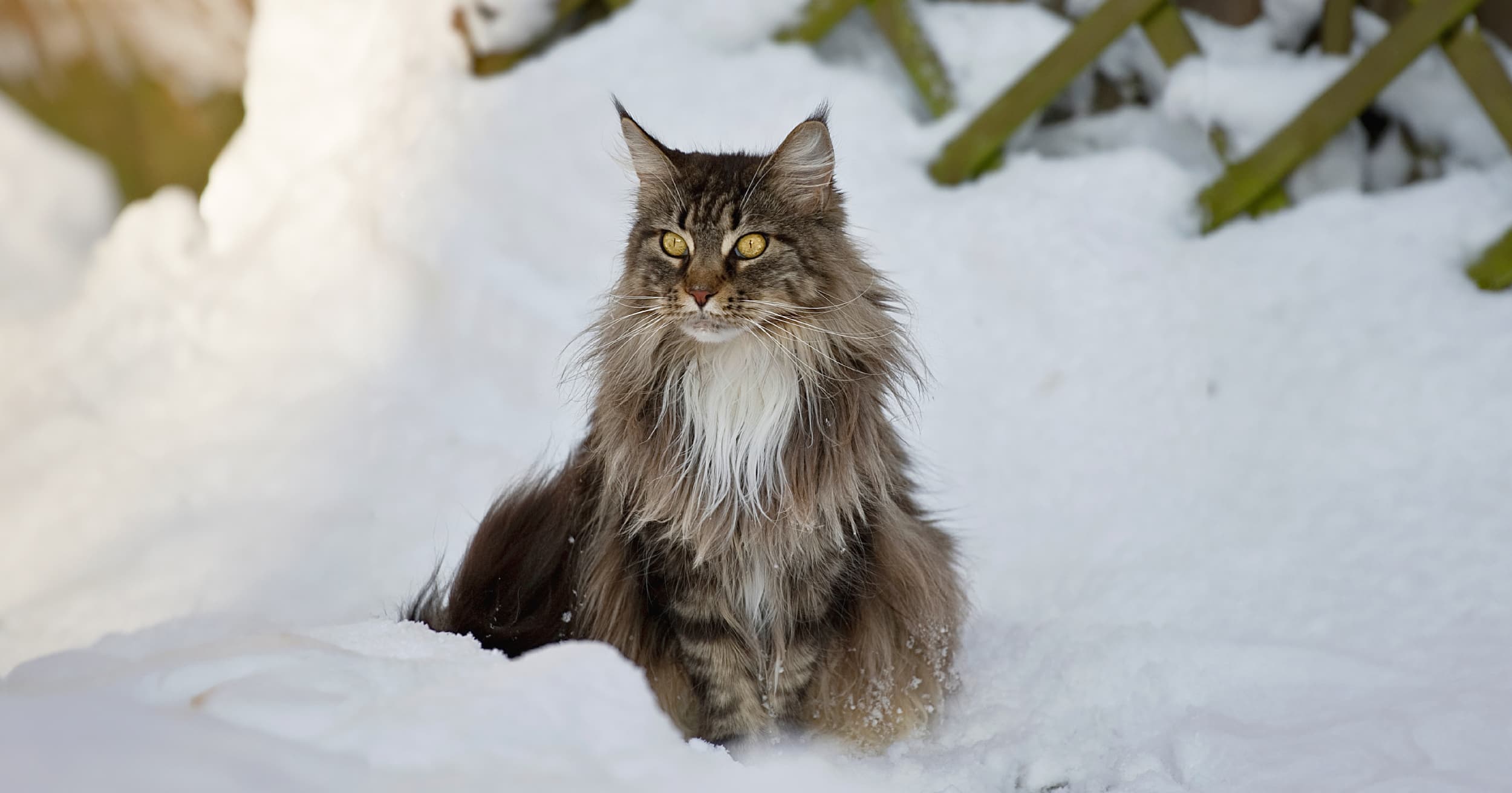
Maine Coons can be considered a ‘landrace’ (a naturally occuring breed, as opposed to one originally created through selective breeding).
As the name suggests, they evolved in New England as domestic cats where they carved out an ecological niche killing rodents on local fishing boats.
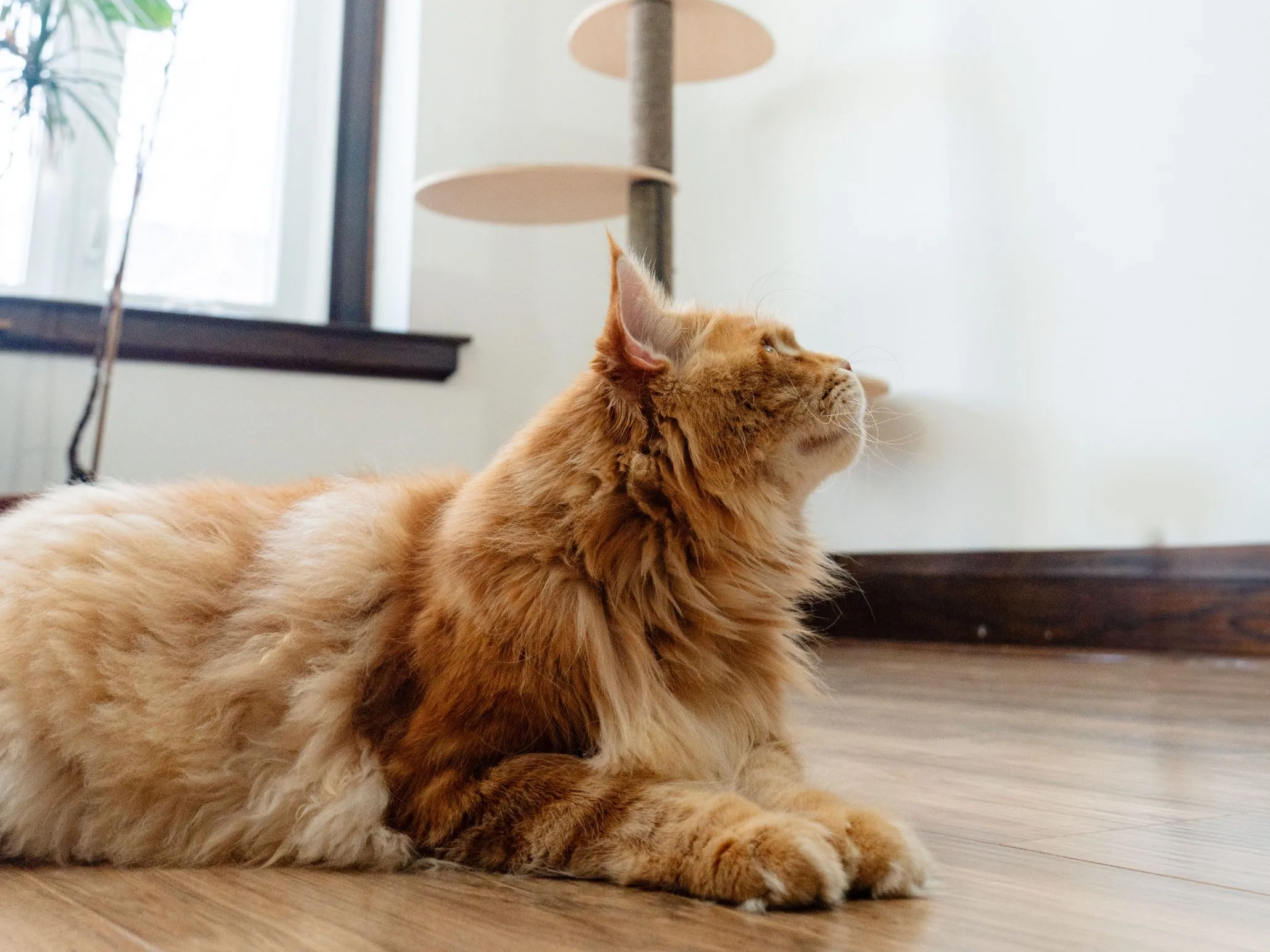
Facing harsh winters, only the fittest cats survived to reproduce. The breed developed its signature long coat to deal with the cold, and long sturdy legs helped Maine Coons climb over snow and rocky terrain.
At one time, a majority of Maine Coons were polydactyl (having five toes or a ‘thumb’) and it’s theorized that this was also an adaptation to snow. The extra surface area of larger paws could have acted like snowshoes, keeping the cat atop the snow banks.
When the breed was granted official status, the five-toe trait was held to not meet the breed standard. Breeders selected against it, and the percent of Maine Coons with polydactylism declined. However, recently there has been a recognition of the polydactyl Maine Coon’s uniqueness and history. Driven by customer demand for “five toe cats”, the trait is making a comeback, and almost 40% of Maine Coons now have it.
Nobody really knows why Maine Coons are called Maine Coons. Various urban legends exist, but most likely it’s simply because they look a bit like raccoons.
Choosing a Maine Coon
As it is when one acquires any purebred cat, adoption is a more complex process than say, buying furniture.
If you want your Maine Coon to be a guaranteed purebred, you must get one with a family tree and from a cattery registered with a cat registry. In the US, this is the CFA, and in other countries may be TICA.
Don’t get confused by the distinction between “show quality” and mere “pet quality” specimens. This isn’t actually relevant to you if you’re just looking for a great cat, since doesn’t mean anything about the cat’s health or personality. The only difference is that ‘show quality’ cats meet the (highly strict, and not necessarily ‘better’) aesthetic requirements for cat shows.
You probably want to start connecting with breeders a few months before you’d actually want to adopt. A breeder may only have kittens available a few times a year, and some kittens may even be reserved before they are born.
How do you know if a breeder is good?
Any good breeder should produce health documentation (vet and vaccine records) of the kitten and a family tree.
Expect to be asked questions about your home and lifestyle. Most breeders are in the profession more so out of a love for the animals than the pursuit of profit, and they will only sign away a kitten to someone they feel comfortable with.
Also, a good breeder won’t allow a kitten to be adopted until it’s a few months old. By then it should be litter box trained and socialized, seen a vet, and been vaccinated. Beware of breeders that refuse to let you tour their cattery.
All purebred cats typically come with a ‘health guarantee’. Part of a breeder’s job is the match their breeding pairs such that kittens are free from certain genetic diseases. The guarantee is basically a refund should those diseases manifest after the adoption. Note that these are usually voided if you don’t get a vet check up within a few days of adopting!
FAQs
I already have a dog, can I adopt a Maine Coon?
Yes… Maine Coons generally get along fine with dogs given their easy-going nature, while their size and strength gives them a certain level of confidence around other animals
Are male and female Maine Coons different?
Females are much smaller, but in terms of personality the breed does not differ by sex.
Which colors / coats do Maine Coons come in?
All of them except lavender, chocolate, and siamese. Eye colors range from gold to green, but white Maine Coons might have blue eyes.
Why should I get a Maine Coon?
If you like big cats or just want a longhair with less grooming, consider getting a Maine Coon! They’re also great if you want a little friend who follows you around without necessarily needing to cuddle with you all the time. Maine Coons love to watch what you’re doing but will also respect your space. They’re also less likely to trigger allergies than most other breeds.
Want to learn more about raising Maine Coons?
Check out this fantastic book: Maine Coon Cats – The Owners Guide from Kitten to Old Age, by Rosemary Kendall
Did I get something wrong? Or miss something you think people should know about Maine Coons?
Please email me at meow@katpole.com
Click here to read about other purebreds.