Posted on Leave a comment

Best Cat Trees for Ragdolls and Savannah Cats (2026 Guide)

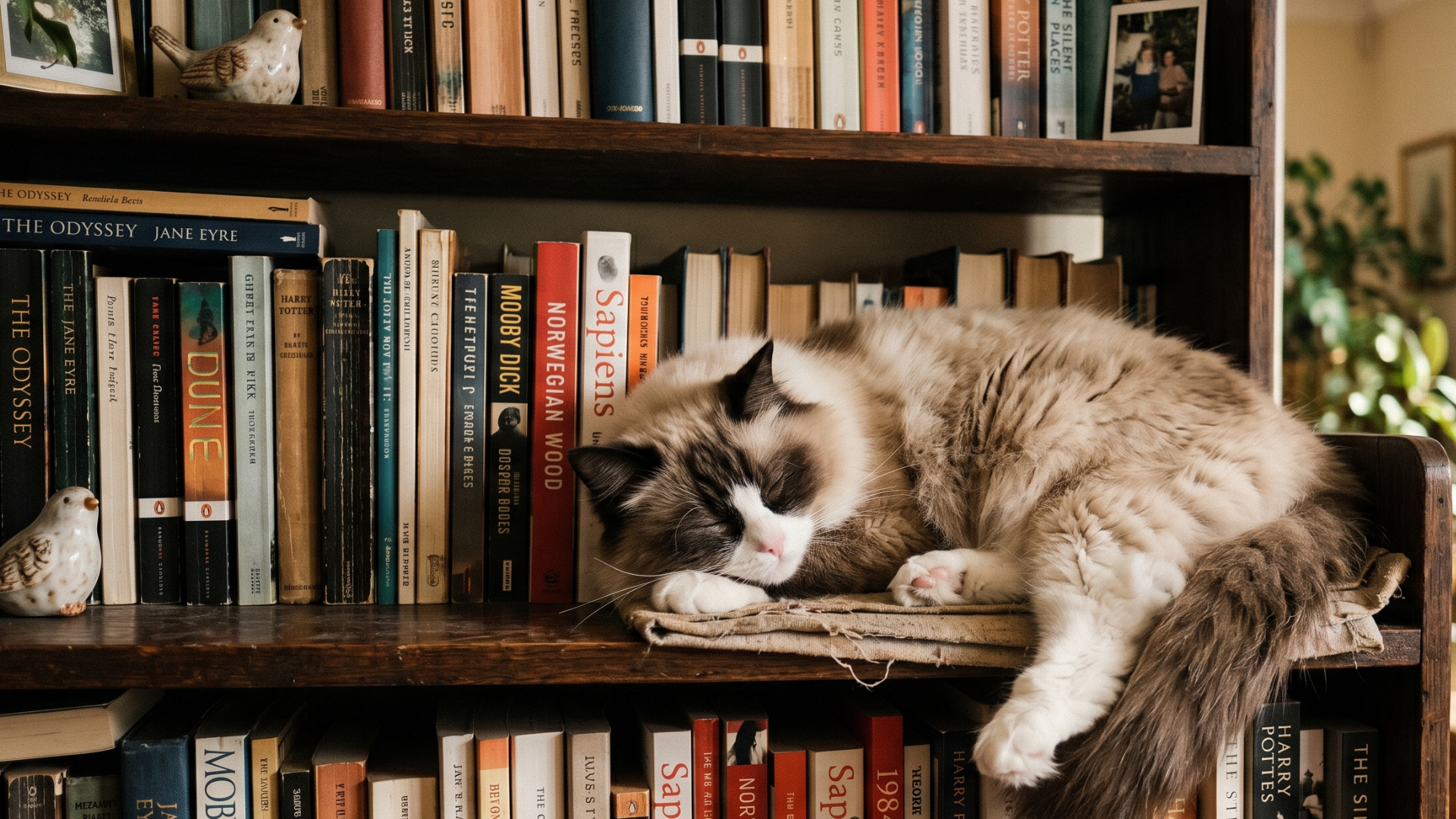
ragdoll on a bookshelf

If you are on a breeder waitlist for a Ragdoll or a Savannah cat, you are preparing to bring home one of the largest, most athletic domestic breeds in the world. Ragdoll males can easily surpass 20 lbs, while Savannah cats hold records for being the tallest domestic felines, boasting incredibly powerful jumping abilities.

Traditional store-bought options simply bend or break under these massive cats. Cats spend up to 70% of their lives sleeping (12 to 16 hours a day), and as natural predators, they seek high, stable vantage points to feel secure. When a cheap cat tree wobbles even once under their weight, they permanently associate that spot with a lack of safety, leading to chronic stress.

Before you bring your new cat home, here are the exact weight limits, dimensions, and engineering features you need to look for when choosing the best cat tree for Ragdolls and Savannahs.

The 18-Pound Trap: Why Standard Trees Fail Heavy Breeds

Most standard cat trees are designed to support a maximum of 18 lbs. For a mature Ragdoll or a high-generation Savannah, this weight limit is a safety hazard.

When a 20lb cat launches themselves at an 18lb-capacity platform, the kinetic force causes compressed cardboard tubes to snap and standard carpeted bases to tip over. To accommodate this force safely, the Katpole was engineered to comfortably hold cats up to 30 lbs per platform. In fact, rigorous testing shows the engineered wood platforms can actually support up to 40 lbs without compromising stability.

The Ultimate Fix for Wobbling: Floor-to-Ceiling Tension

Savannah cats are notorious for their incredible vertical leaps. A freestanding base will eventually rock when they launch off it.

The most secure option for high-energy, heavy breeds is a tension-mounted system. Katpole uses a floor-to-ceiling stabilization system secured by a tension bolt—the exact same mechanical physics used in load-bearing construction scaffolding. This engineering guarantees zero wobble, even when multiple large cats are climbing the pole simultaneously. Because it uses tension, it requires no drills or screws, meaning it leaves zero damage on your floors or ceilings.

Core Materials: Steel vs. Cardboard

The reason cheap trees fail your home and the environment is their reliance on compressed cardboard and low-grade plastics. To support these giant breeds, the core of your cat tree must be metal.

  • Aircraft-Grade Aluminum: Instead of flimsy cardboard tubes, the Katpole is built around a heavy-duty, aircraft-grade aluminum and steel core. This provides an exceptional strength-to-weight ratio.
  • Heavy-Duty Steel Bolts: The pole pieces attach to each other using heavy-duty steel bolts welded onto chrome flanges, preventing any risk of rusting or snapping.
  • Waterproof Engineered Wood: Savannahs and Ragdolls can be messy. Solid wood can absorb moisture and warp, which is why Katpole uses engineered wood wrapped in a premium, 100% waterproof vinyl veneer. This ensures the true-to-life look of American Walnut or Canadian Maple while remaining completely impervious to stains and odors.

Dimensions Designed for Maximum Comfort

A high weight limit doesn’t matter if the platform is too small for a Ragdoll to sprawl out. Look for expansive resting areas.

Katpole’s precision-cut wood platforms feature a massive 23.6-inch diameter. Additionally, the canvas hammocks (lined with a soft microsuede interior) are perfectly sized for large breeds to comfortably lounge and offer a specially contoured edge that acts as a natural chin-rest. Because Katpole’s layout is fully customizable with 360-degree rotation, you can arrange the platforms to serve as a staircase. This means your heavy or older cat never has to strain their joints to jump to the top.

Katpole vs. Traditional Cardboard Trees

FeatureTraditional Cat TreesKatpole
Weight Capacity18 lbsUp to 30 lbs per cat (Platforms hold 40 lbs)
Core MaterialCompressed CardboardAircraft-Grade Aluminum & Steel
Stability SystemHeavy, carpeted floor baseFloor-to-ceiling tension bolt system
Scratch SurfacesGlued-on sisal ropeReplaceable carpets
Lifespan GuaranteeNone10-Year Warranty

Elevating Your Living Room Design

Owning a massive, beautiful purebred cat shouldn’t mean sacrificing a corner of your living room to an ugly, dander-carpeted eyesore.

When you upgrade to a heavy-duty, Japandi-inspired design like Katpole, you are investing in actual furniture. With a 10-year warranty, fully replaceable parts (including the carpets and poles), and a 100-day risk-free trial, it is the last cat tree you will ever need to buy.

Give your Ragdoll or Savannah the rock-solid, elevated safe space they biologically crave.
Posted on Leave a comment

The Best Cat Tree for Maine Coons: Weight Limits and Materials to Look For

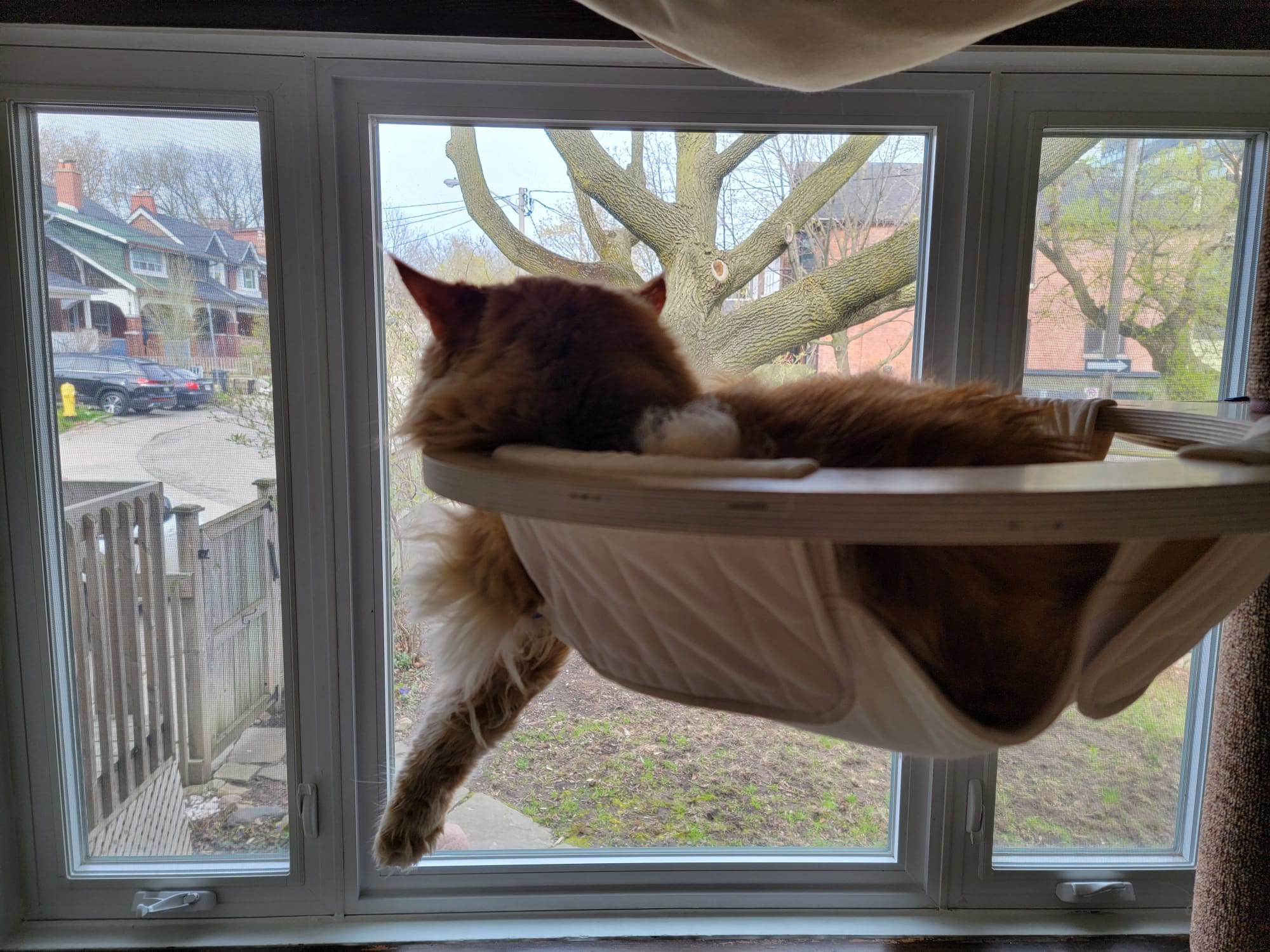
Orange Maine Coon cat sleeping in a cat tree hammock, watching out the window during Fall.

If you share your home with a Maine Coon, you already know they aren’t just cats—they are literal house panthers. You also know the exact, frustrating cycle of buying pet furniture for them: you bring home a new cat tree, they love it, and within a few months, the cardboard posts lean, the platforms sag, and the whole thing ends up on the curb.

Traditional store-bought options simply bend or break under these massive cats. Cats spend up to 70% of their lives sleeping (12 to 16 hours a day) , and as natural predators, they seek high, stable vantage points to feel secure. When a cheap cat tree wobbles even once under their weight, they permanently associate that spot with a lack of safety, leading to chronic stress.

If you are tired of throwing away money on disposable furniture, here are the exact weight limits, dimensions, and materials you need to look for when choosing the best cat tree for a Maine Coon.

The 40-Pound Rule: Understanding Weight Limits

Most standard cat trees are designed to support a maximum of 18 lbs. For a Maine Coon, that is a recipe for disaster.

When shopping for large breeds, you need to look at the structural capacity of the individual resting areas. The Katpole, for example, was originally designed specifically for our founder’s 23lb Maine Coon, Tubes, because standard store-bought trees kept breaking under his weight.

To accommodate the kinetic force of a heavy cat jumping, the Katpole is engineered to comfortably hold cats up to 30 lbs per platform. In fact, testing shows the engineered wood platforms can actually support up to 40 lbs without compromising stability.

Materials Matter: Steel Cores vs. Cardboard Tubes

The reason cheap trees fail your home and the environment is their reliance on compressed cardboard and low-grade plastics. To support a Maine Coon, the core of your cat tree must be metal.

  • Aircraft-Grade Aluminum: Instead of flimsy cardboard tubes, the Katpole is built around a heavy-duty, aircraft-grade aluminum and steel core. This provides an exceptional strength-to-weight ratio.
  • Heavy-Duty Steel Bolts: The pole pieces attach to each other using heavy-duty steel bolts welded onto chrome flanges, preventing any risk of rusting or snapping.
  • Waterproof Engineered Wood: Solid wood can absorb moisture and warp, which is why Katpole uses engineered wood wrapped in a premium, 100% waterproof vinyl veneer. This ensures the true-to-life look of American Walnut or Canadian Maple while remaining completely impervious to stains and odors.

Dimensions Designed for “House Panthers”

A high weight limit doesn’t matter if the platform is too small for a Maine Coon to sprawl out. Look for expansive resting areas. Katpole’s precision-cut wood platforms feature a massive 23.6-inch diameter. Additionally, the canvas hammocks (lined with a soft microsuede interior) are perfectly sized for large breeds to comfortably lounge and offer a specially contoured edge that acts as a natural chin-rest.

Because Katpole’s layout is fully customizable with 360-degree rotation, you can arrange the platforms to serve as a staircase. This means your heavy or older cat never has to strain their joints to jump to the top.

Katpole vs. Traditional Cardboard Trees

FeatureTraditional Cat TreesKatpole
Weight Capacity18 lbsUp to 30lbs per cat (platforms hold 40 lbs)
Core MaterialCompressed CardboardAircraft-grade Aluminum & Steel
Stability SystemHeavy, carpeted floor baseFloor-to-ceiling tension bolt system
Scratch SurfacesGlued-on sisal ropeReplaceable Carpets
Lifespan GuaranteeNone10-Year Warranty

The Ultimate Fix for Wobbling: Floor-to-Ceiling Tension

Even with a strong core, a freestanding base will eventually rock when a 20lb cat launches off it. The most secure option for large breeds is a tension-mounted system.

Katpole uses a floor-to-ceiling stabilization system secured by a tension bolt—the exact same mechanical physics used in load-bearing construction scaffolding. This engineering guarantees zero wobble, even when multiple large Maine Coons are climbing the pole simultaneously. It requires no drills or screws, meaning it leaves zero damage on your floors or ceilings.

Invest in a “Buy It For Life” Solution

Maine Coon owners are used to the cycle of replacing shredded, broken cat trees. When you upgrade to a heavy-duty, Japandi-inspired design like Katpole, you are investing in actual furniture.

With a 10-year warranty, fully replaceable parts (including the carpets and poles), and a 100-day risk-free trial, it is the last cat tree you will ever need to buy. Give your giant cat the rock-solid, elevated safe space they biologically crave.

Posted on Leave a comment

How Much Does It Cost to Cremate a Cat in 2025?

a cremated cat's ashes on the mantleplace next to his portrait

On average, communal cremation—where multiple pets are cremated together without ashes returned—ranges from $50 to $100. Private cremation, where the cat is cremated alone and ashes are returned, typically costs $100 to $200.


Additional fees may apply for services like picking up the pet from the vet, viewing the cremation, or purchasing a special urn.


The cost of cremating a cat varies based on the cat’s size, and prices can differ significantly by area, so it’s wise to contact local crematories or veterinarians for exact quotes.

How Much Does It Cost to Cremate a Cat at the Vet?

Most veterinarians don’t perform cremations on-site due to the need for specialized equipment and permits. Instead, they partner with pet crematories to arrange the process.


The cost through a vet is generally similar to the crematory’s pricing—$50 to $200 depending on the cremation type—with a possible extra fee for the vet’s coordination efforts.

Is It Better to Cremate or Bury a Cat?

Cremation is often more convenient and affordable, especially in urban areas where burial might be restricted or impractical, and it allows you to keep the ashes as a memorial.

Burial offers a physical site to visit but can be costlier due to plot fees and may face legal restrictions. Your town or city might have bylaws regarding pet burial.

What If I Don’t Have Money to Cremate My Cat?

If cremation costs are out of reach, options exist. Communal cremation is the most budget-friendly at $50 to $100. Some animal shelters, humane societies, or veterinary schools offer low-cost services. Some pet insurance plans cover cremation—check your policy.

Posted on Leave a comment

Is Peppermint Oil Safe For Cats?

cat with peppermint essential oil is not safe

Peppermint oil has many uses: for flavor in desserts and candies; as a pesticide (effective against ants, spiders, and rodents); as a massage oil; and in diffusers. However…

Is peppermint essential oil safe for cats?

Answer: No.

Do not allow your cats to swallow or inhale peppermint oil (that means don’t let them drink it or put it in a diffuser near them).

Why is peppermint oil toxic to cats?

Peppermint oil contains compounds like menthol and pulegone, which cats cannot metabolize effectively due to their liver’s inability to produce certain enzymes. This can lead to a toxic buildup in their system, potentially causing serious health issues such as liver damage, respiratory distress, or even neurological problems. Cats are particularly sensitive to essential oils, and peppermint oil is no exception.

If your cat has been exposed to peppermint oil, watch for symptoms like drooling, vomiting, difficulty breathing, or lethargy. Contact your veterinarian immediately if you notice any of these signs.

Note that the menthol in peppermint oil can also cause side effects for small children and babies.

Is diluted peppermint oil safe for cats?

No. Cats can still absorb the toxic elements through their skin or by inhaling the scent.

Posted on Leave a comment

Definitive Guide to Raising a Maine Coon: Top 7 Need-to-Knows

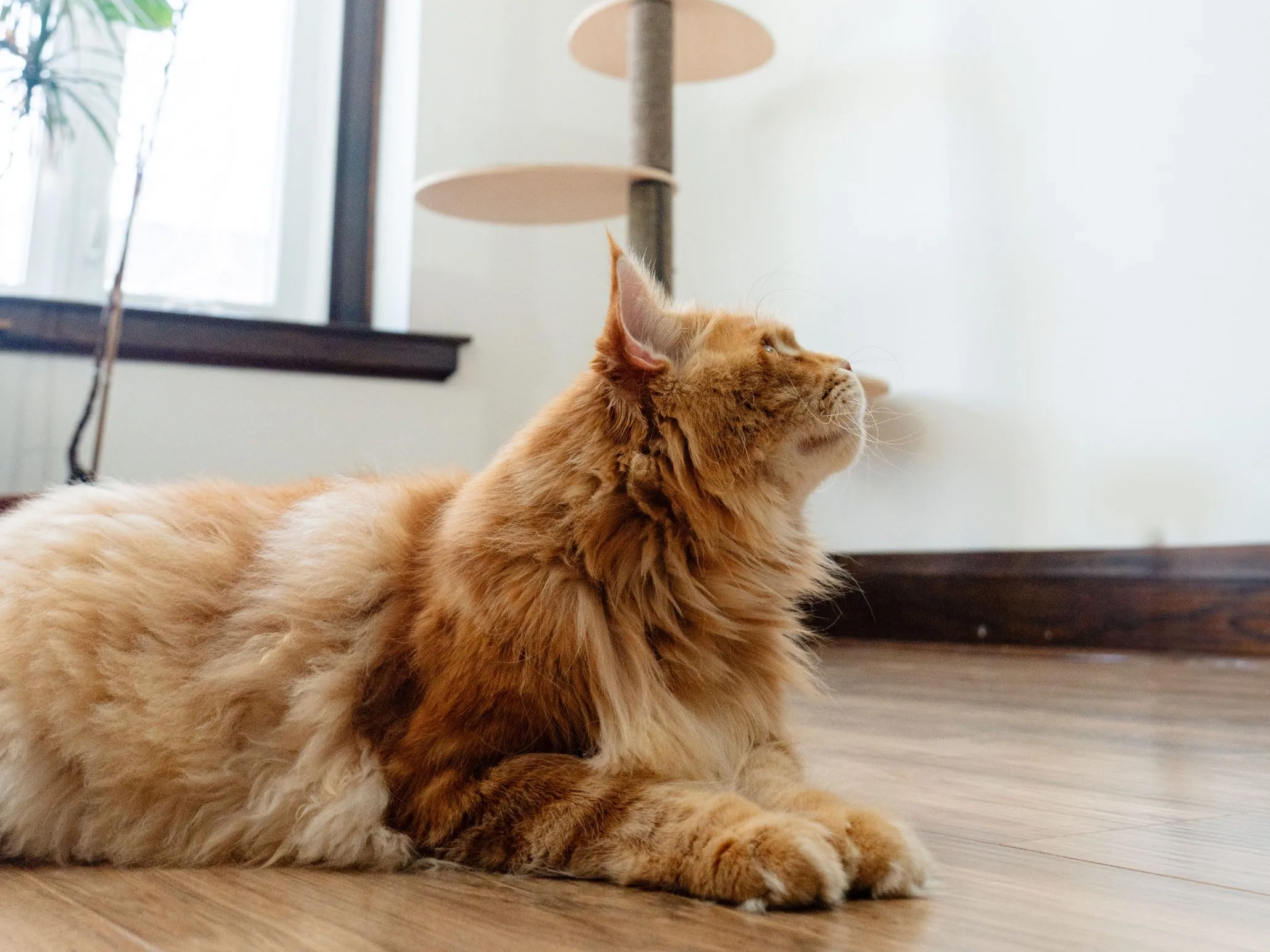
Orange Maine Coon lying on a wooden floor


Quick Facts

Lifespan:  12 – 15 years

Size:  Males 15 – 25lbs; Females 10 – 15lbs

Maturation:  3 – 4 years

Personality:  Cooperative, silly, easy-going, social, kitten-like

Known for:  Being the largest domestic cat breed

Price: $1000 – $4000

Contents:


How did Maine Coons evolve?

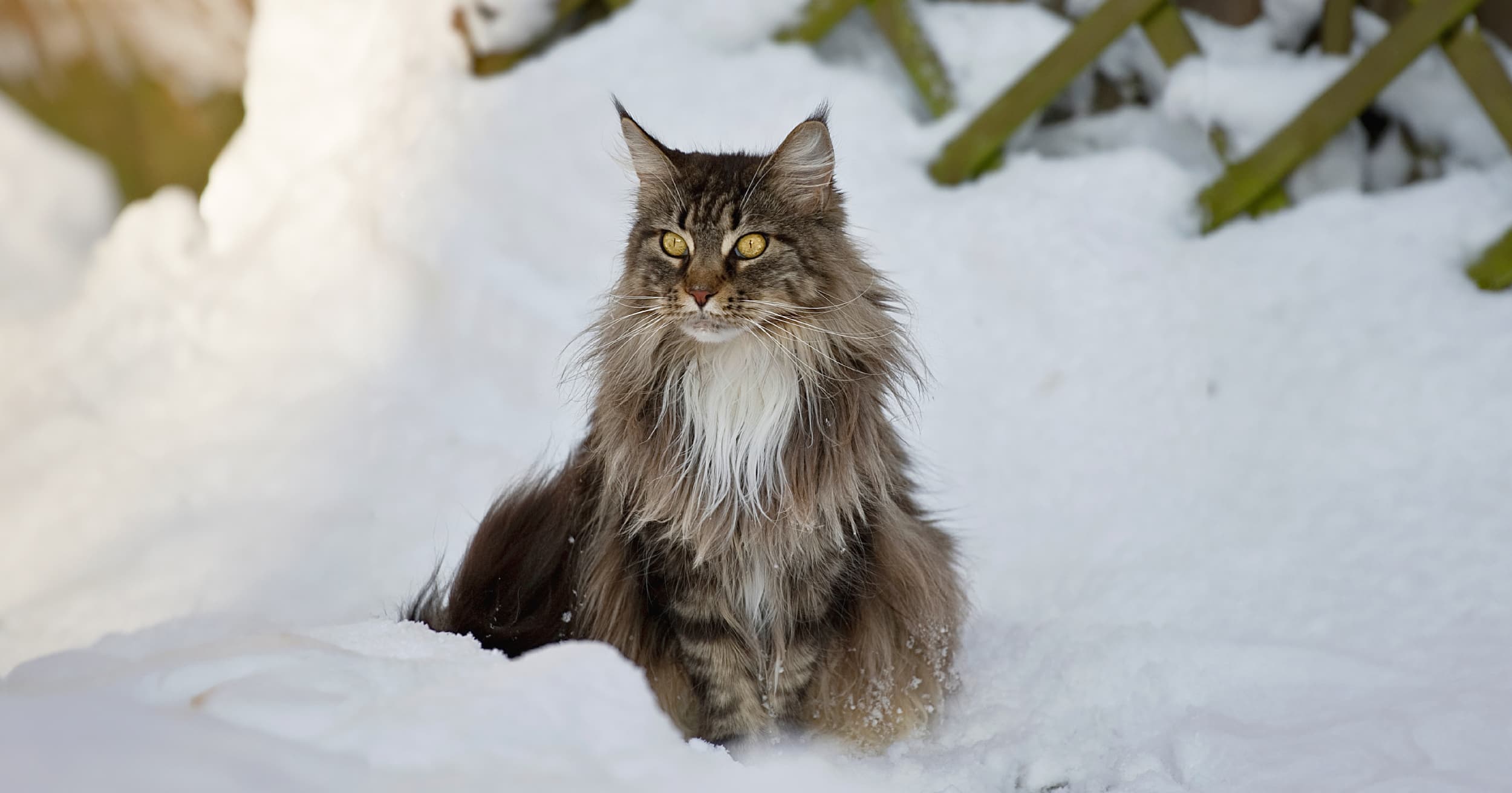
maine coon sitting outside in snow

Maine Coons can be considered a ‘landrace’ (a naturally occuring breed, as opposed to one originally created through selective breeding).

As the name suggests, they evolved in New England as domestic cats where they carved out an ecological niche killing rodents on local fishing boats.

Facing harsh winters, only the fittest cats survived to reproduce. The breed developed its signature long coat to deal with the cold, and long sturdy legs helped Maine Coons climb over snow and rocky terrain.

At one time, a majority of Maine Coons were polydactyl (having five toes or a ‘thumb’) and it’s theorized that this was also an adaptation to snow. The extra surface area of larger paws could have acted like snowshoes, keeping the cat atop the snow banks.

When the breed was granted official status, the five-toe trait was held to not meet the breed standard. Breeders selected against it, and the percent of Maine Coons with polydactylism declined. However, recently there has been a recognition of the polydactyl Maine Coon’s uniqueness and history. Driven by customer demand for “five toe cats”, the trait is making a comeback, and almost 40% of Maine Coons now have it.

Nobody really knows why Maine Coons are called Maine Coons. Various urban legends exist, but most likely it’s simply because they look a bit like raccoons.

Choosing a Maine Coon

As it is when one acquires any purebred cat, adoption is a more complex process than say, buying furniture.

If you want your Maine Coon to be a guaranteed purebred, you must get one with a family tree and from a cattery registered with a cat registry. In the US, this is the CFA, and in other countries may be TICA.

Don’t get confused by the distinction between “show quality” and mere “pet quality” specimens. This isn’t actually relevant to you if you’re just looking for a great cat, since doesn’t mean anything about the cat’s health or personality. The only difference is that ‘show quality’ cats meet the (highly strict, and not necessarily ‘better’) aesthetic requirements for cat shows.

You probably want to start connecting with breeders a few months before you’d actually want to adopt. A breeder may only have kittens available a few times a year, and some kittens may even be reserved before they are born.

How do you know if a breeder is good?

Any good breeder should produce health documentation (vet and vaccine records) of the kitten and a family tree.

Expect to be asked questions about your home and lifestyle. Most breeders are in the profession more so out of a love for the animals than the pursuit of profit, and they will only sign away a kitten to someone they feel comfortable with.

Also, a good breeder won’t allow a kitten to be adopted until it’s a few months old. By then it should be litter box trained and socialized, seen a vet, and been vaccinated. Beware of breeders that refuse to let you tour their cattery.

All purebred cats typically come with a ‘health guarantee’. Part of a breeder’s job is the match their breeding pairs such that kittens are free from certain genetic diseases. The guarantee is basically a refund should those diseases manifest after the adoption. Note that these are usually voided if you don’t get a vet check up within a few days of adopting!

FAQs


I already have a dog, can I adopt a Maine Coon?

Yes… Maine Coons generally get along fine with dogs given their easy-going nature, while their size and strength gives them a certain level of confidence around other animals

Are male and female Maine Coons different?

Females are much smaller, but in terms of personality the breed does not differ by sex.

Which colors / coats do Maine Coons come in?

All of them except lavender, chocolate, and siamese. Eye colors range from gold to green, but white Maine Coons might have blue eyes.

Why should I get a Maine Coon?

If you like big cats or just want a longhair with less grooming, consider getting a Maine Coon! They’re also great if you want a little friend who follows you around without necessarily needing to cuddle with you all the time. Maine Coons love to watch what you’re doing but will also respect your space. They’re also less likely to trigger allergies than most other breeds.

Want to learn more about raising Maine Coons?

Check out this fantastic book: Maine Coon Cats – The Owners Guide from Kitten to Old Age, by Rosemary Kendall

Did I get something wrong? Or miss something you think people should know about Maine Coons?

Please email me at meow@katpole.com


Click here to read about other purebreds.

Posted on Leave a comment

Best Cat Tree for Large Cats in 2025

Orange Maine Coon sitting on a platform of the best cat tree for large cats, which is made of wood and scratch carpets and aluminum

Is your cat 15lbs or more? Learn why Katpole is the best cat tree for large cats…

Are you worried about your big cats knocking over flimsy cat trees? It can be funny when it happens, but unexpected falls can strain your cat’s joints, especially for certain purebreds. Not to mention that a teetering cat tower can knock over lamps, glasses, or fall on the cat itself.

video of a cat tree falling over with a cat jumping from the top

The problem with most cat trees is that they are made from flimsy materials like cardboard and simply rest on the floor. Often, a single cat weighs more than the whole tree! It’s no wonder that when your Maine Coon or Ragdoll jumps onto their tower it looks like it’s about to come crashing down.

Some cat owners give up finding a suitable cat tower for large cats. But most cats have not been bred to be “house cats” that live indoors 24 hours a day. To stay healthy, cat require an adequate place to climb and scratch.

One solution is a cat tree that’s drilled to the floor or ceiling. The obvious problem with this is that it damages your house. Thankfully, there is a better solution…

Katpole: XXL Heavy Duty Cat Tower for Cats of all Sizes

When we designed Katpole (originally for our own Maine Coons), we wanted a cat tree that would be absolutely sturdy with zero chance of falling down. And without needing to screw in into our ceiling or walls.

After testing different materials, we chose an aluminum pole which is light and unbendable. You install it with something called a tension bolt. This simple mechanism leaves no mark on the floor or ceiling, and yet can withstand 200lbs of force! That’s right – even a human being would struggle to knock it out of place, let alone a 25lb cat.

With its aluminum, steel, and wood construction, Katpole is the sturdiest cat tree out there. It’s also one of the only big cat trees that comes with hammocks, which are so spacious they can fit even the largest cat breeds, like Savannah cats and Maine Coons. Finally, Katpole is unique as a carpeted cat tree for big cats. But these aren’t just any carpets. They are 100% replaceable, so when they start to wear out, you can order more from the katpole website (and you the rest of the cat tree will last you a lifetime).

cat tower for large cats being installed with aluminum poles screwed together by hand
Aluminum poles being installed

We’re noticed our cats are much more comfortable climbing and playing on Katpole than any other cat tree we’ve had in the past. They get out lots of energy during the day and sleep soundly at night knowing they’re safe up in their tree.

Katpole: The Best Cat Tree for Large Cats

Want to learn more about our cat tree? Click the button below!